IICRC Water Restoration Standards in Hamilton Proper Explained
When your basement is filling at midnight or a supply line has been spraying behind a wall for hours, you are not thinking about acronyms. You are thinking about how to stop the water, what your insurance will cover, and who you can trust to walk through your front door at 2am. That is exactly why IICRC certification matters in Hamilton Proper, even though almost no homeowner has heard of it before disaster strikes. The Institute of Inspection, Cleaning and Restoration Certification (IICRC) writes the technical standards that separate a real restoration company from a guy with a shop vac and a van.
At Hamilton Proper Water Restoration, we are IICRC Certified, BBB A+ rated, and have been serving Hamilton Proper homeowners since 2018. We have seen the aftermath of uncertified work more times than we can count. Floors that looked dry on the surface but rotted from below. Drywall replaced over saturated studs. Mold blooms that appeared six weeks after the homeowner paid in full. The damage is not always visible on day one, but it surfaces. If we cannot help your specific situation, we will tell you directly and point you to who can. Below is the honest comparison most contractors will not show you.
Problem: You Cannot Tell a Real Restoration Crew From a Carpet Cleaner With a Fan
Anyone in Hamilton Proper can buy a truck, a wet vac, and three air movers, then call themselves a water damage company. There is no state license required in most cases. That is how homeowners end up paying $4,000 for work that left moisture trapped behind the baseboards.
Solution: Ask for IICRC Credentials Before You Sign Anything
IICRC certification is issued to individual technicians, not just companies. The credentials you want to see on a water loss are WRT (Water Damage Restoration Technician), ASD (Applied Structural Drying), and for contaminated jobs, AMRT (Applied Microbial Remediation Technician). A certified firm will have at least one technician on each crew holding these. Before the trucks roll, ask three questions:
- Which IICRC certifications does the technician arriving at my house hold?
- Are you working to the S500 standard on this loss?
- Will I receive daily moisture logs and a final drying report?
If the answers are vague, keep calling. A certified crew will rattle these off without flinching. You can also cross check companies on the IICRC's public registry in about 60 seconds. Keep in mind that certifications expire and require continuing education, so a technician carrying a current WRT card has been tested on the latest revision of the standard, not a version from a decade ago.
Problem: Your Insurance Claim Gets Denied or Underpaid
Adjusters read restoration invoices closely. If the documentation does not match the S500 framework they expect, the claim slows down or gets reduced.
Solution: Use a Restorer Who Writes Reports Adjusters Recognize
Certified firms produce a standard package: initial inspection notes, category and class determination, daily moisture logs, equipment placement diagrams, and a final dryness verification. That paperwork tracks line by line with Xactimate, the software most insurers use. If you are unsure what your policy actually covers, our overview of what homeowners insurance covers for water damage is worth five minutes before you call the adjuster. Good documentation is often the difference between a fully paid claim and a $3,000 out of pocket surprise.
Problem: You Do Not Know What Questions to Ask After the Job
Most homeowners sign the completion paperwork without really knowing if the work met the standard. Six months later, when a floor cups or a wall stains, it is too late to push back.
Solution: Request a Final Walkthrough With Verification Readings
Before signing, ask the technician to take moisture readings in your presence at the same spots logged on day one. The numbers should be at or below the drying goal that was set at the start. Confirm that any removed drywall, flooring, or insulation is listed on the scope sheet, and that the final report references the S500 by name. A certified Hamilton Proper Water Restoration crew will hand you that packet without being asked, because they know the next person reading it is your adjuster.
Problem: Mold Shows Up Three Weeks After the Crew Leaves
This is the call we get most often from homeowners who used a non certified company. The drywall looks fine, the carpet feels dry, and then a musty smell creeps in. Mold colonization can start within 24 to 48 hours of water exposure on the right materials.
Solution: Apply S520 Protocols When Contamination Is Possible
The S520 is the IICRC's mold remediation standard, and it pairs with the S500 on any job where contamination is suspected. Certified crews use containment barriers, negative air machines with HEPA filtration, and antimicrobial treatments rated for restoration use, not bleach from a hardware store. The standard also requires that porous materials soaked by Category 3 water be removed, not dried in place. Cutting corners here is what creates the mold call later. Hamilton Proper Water Restoration follows both standards on every loss where the conditions call for them, and we document the work so your insurer has no reason to push back.
Why Certification Matters When the Water Is Still Rising
IICRC standards exist because water damage is unforgiving. Miss a wet cavity, misclassify the water, or skip the drying log, and the problem comes back as mold, warped framing, or a denied claim. When you call Hamilton Proper Water Restoration in Hamilton Proper, you get IICRC Certified technicians, S500 documentation, and straight answers about what your property actually needs. If the job is small enough to handle yourself, we will say so. If it needs full mitigation, we will be on site fast and we will show our work. Call anytime, day or night, for a free inspection.
Problem: Drying Equipment Looks Impressive but Nothing Is Being Measured
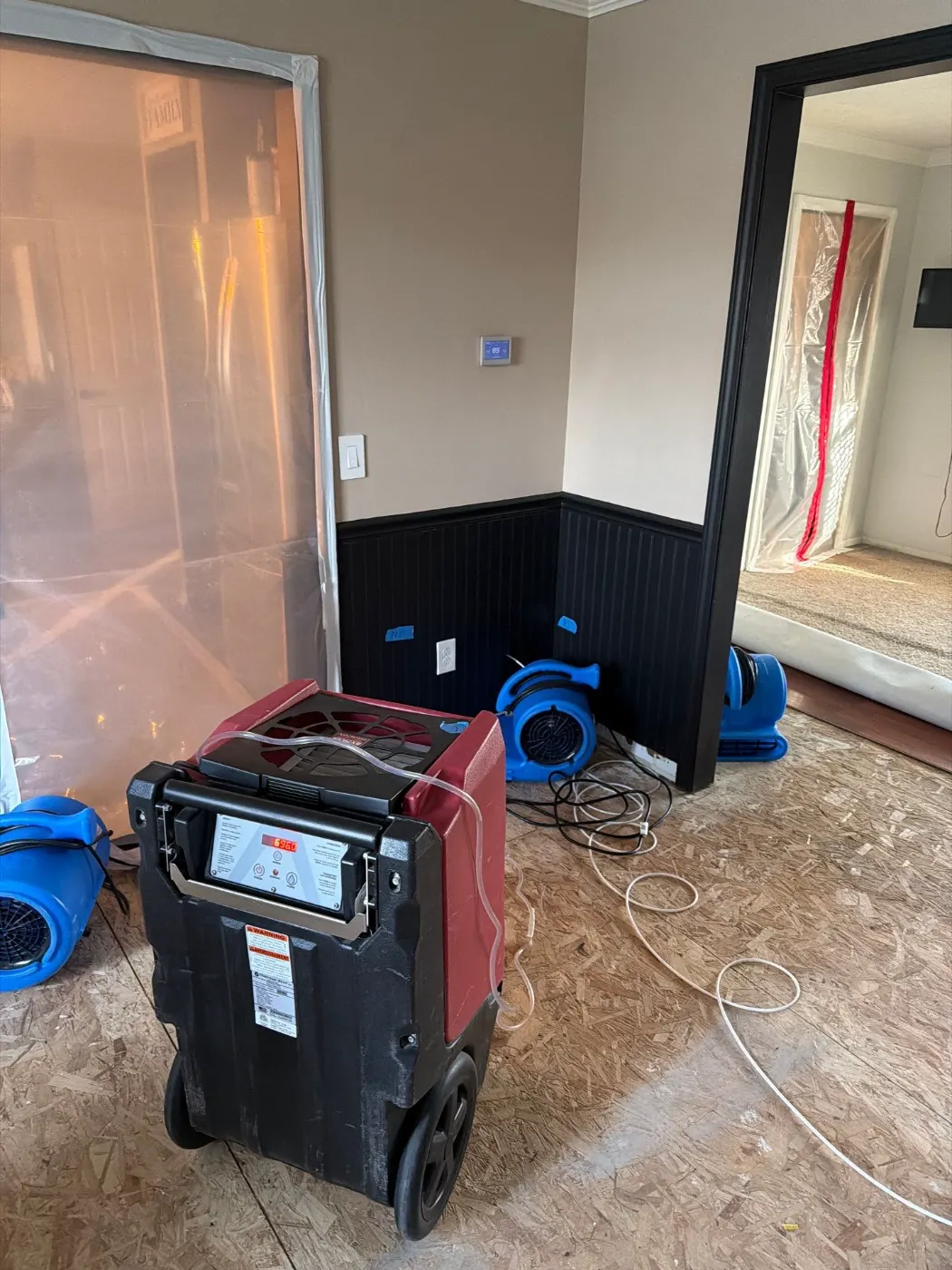
You will notice it on the second day. The fans are loud, the dehumidifier is humming, and the technician says everything is on track. But how does anyone actually know the framing is drying? Without measurements, they do not. They are guessing, and you are paying for guesses.
Solution: Insist on Daily Moisture Readings and a Drying Goal
The S500 requires the restorer to establish a drying goal, usually based on unaffected materials in the same building. Then moisture content is measured daily in the same locations until materials hit that goal. On a typical Hamilton Proper water loss, professional drying takes 3 to 5 days. Some jobs run 7 days when hardwood or plaster is involved. You can read more on what affects the clock in our breakdown of how long water damage takes to dry. If your restorer cannot show you a moisture map with numbers, they are not following the standard. Ask to see readings from the same probe locations each day. A trend that flattens out before reaching the goal usually means equipment needs to be repositioned or upsized, not that the job is finished.
Problem: The Wrong Category Assessment Costs You Thousands
The S500 splits water losses into three categories. Category 1 is clean water from a supply line. Category 2 is gray water with some contamination, like a washing machine overflow. Category 3 is black water, which includes sewage, flood water, and any water that has sat long enough to grow bacteria. The category controls what gets saved and what gets cut out.
Solution: Demand a Documented Category and Class Determination
A certified technician walks in with a moisture meter, a thermo hygrometer, and sometimes a thermal camera. Within the first within 2 hours, they should be able to tell you the category of water, the class (which measures how much material is wet), and the affected square footage. If your carpet pad was soaked by a toilet supply line that ran for two days, that water has likely shifted from Category 1 to Category 2 because of dwell time. A real assessment captures that. For a deeper breakdown, our guide on Category 1 vs Category 2 vs Category 3 water damage walks through the exact thresholds. Get the category in writing. Your adjuster will ask for it.
Frequently Asked Questions
What does IICRC certification actually require?
It requires documented training, a passing exam score, ongoing continuing education, and adherence to the S500 standard. Hamilton Proper Water Restoration maintains active WRT certification for every lead tech on the Hamilton Proper crew.
Is IICRC certification legally required in Hamilton Proper?
No state mandates it, but most insurance carriers will only reimburse work performed by IICRC certified firms or require equivalent documentation. Hiring a non-certified contractor can jeopardize your claim.
How long should a certified drying job take?
A Class 2 residential loss in Hamilton Proper typically dries in 3 to 5 days with proper equipment loading. Larger Class 3 or Class 4 losses can take 7 to 10 days. Daily monitoring confirms progress.
What is the difference between WRT and ASD certification?
WRT covers standard water damage restoration. ASD (Applied Structural Drying) covers complex drying scenarios involving hardwood, plaster, and trapped moisture. Hamilton Proper Water Restoration carries both.
How do I verify a Hamilton Proper contractor's IICRC number?
Visit iicrc.org and use the verification tool. Enter the technician name or firm and confirm active status. We provide our numbers on every estimate without being asked.
Have a restoration question?
Our IICRC certified Hamilton Proper crew is ready to help. Free assessments, estimate based on what we can sees, no pressure.